

October 2, 2026
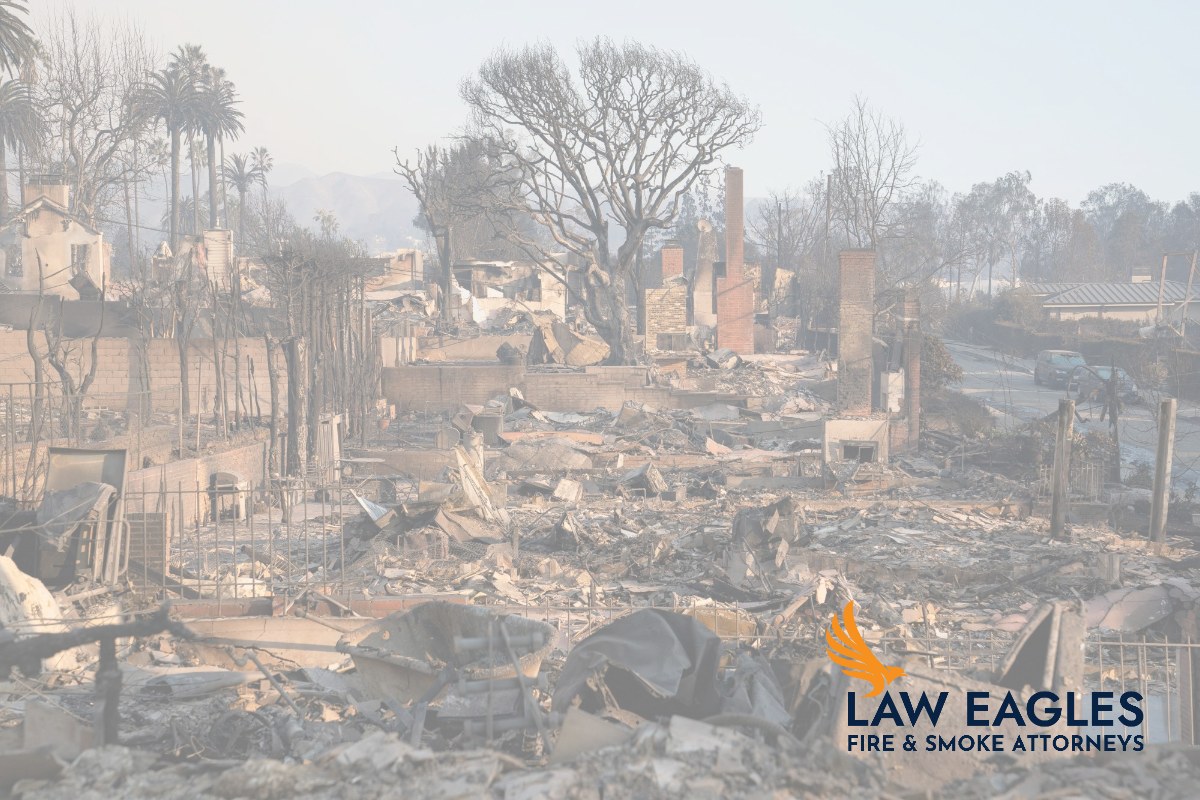
Every fire insurance claim in California runs on several deadlines at once, and most homeowners only learn about them after one has already passed. If your home burned in the Palisades or Eaton fire, one date stands above the rest: January 7, 2027. That is the date the standard 24-month limit to sue your insurance company runs out for losses that began on January 7, 2025.
It isn’t the only clock on your claim, and it isn’t always as final as it sounds. Here is how each deadline works, what can move it, and what to do while there’s still time.
The deadline to sue your insurance company
California’s standard fire policy sets a time limit for filing a lawsuit against your insurance company. Under Insurance Code section 2071, that limit is 12 months from the “inception of the loss,” which means the day the fire began damaging your property. If the loss is related to a declared state of emergency, the limit is extended to 24 months.
That difference matters. A house fire on your street that wasn’t tied to a declared emergency gives you one year. A wildfire covered by a state of emergency proclamation gives you two. For the Palisades and Eaton fires, the state of emergency was declared on January 7, 2025, so the 24 months end on January 7, 2027.
This deadline applies to filing a lawsuit, not to reporting your claim. Two other early deadlines apply to the claim itself. The policy requires written notice of the loss “without unnecessary delay,” and it requires a proof of loss within 60 days after the loss unless your insurance company extends that time in writing. If you never received a written extension, ask for one now and keep a copy.
Why the deadline isn’t always the deadline
Here is the part most websites skip. California courts have held that the time limit to sue can be paused, or “tolled,” while your insurance company is still handling your claim. In Prudential-LMI Commercial Insurance v. Superior Court, the California Supreme Court ruled that the clock stops running from the time you give the insurance company notice of the claim until it formally denies the claim in writing.
In plain terms: if you reported your fire promptly and your insurance company has spent months inspecting, requesting documents, and sending estimates, much of that time may not count against you. A claim reported 10 days after the fire and still under review could have more than the 24 months on paper.
We don’t recommend planning around that. Tolling ends when the insurance company clearly denies the claim, and fights break out over what counts as a denial. Does a lowball payment end the pause? What about a partial denial, or a letter that says “we consider this matter closed”? Those questions get litigated, and they get litigated best before the deadline, not after it. If your claim is still unresolved as January 7, 2027 gets close, the safest move is to have an attorney review your file and decide whether to file suit while you still have a clean margin.
How long your insurance company has to pay additional living expenses
After a total loss, Additional Living Expenses (ALE) pay for the cost of living somewhere else while you rebuild: rent, extra food costs, and similar expenses. Insurance Code section 2060 requires that coverage to last at least 24 months after a loss tied to a declared state of emergency. If you run into delays despite acting in good faith and with reasonable diligence, the insurance company must grant an extension of up to 12 more months, for a total of 36.
Permit backlogs, debris removal, and contractor shortages are the usual reasons people need the extra year. Don’t wait for the insurance company to bring it up. Ask for the extension in writing well before month 24, and keep records of every delay that was outside your control. Your policy’s dollar limit for ALE still applies, so the extension helps only if you have limit left to use.
Smoke damage claims have their own protection. Under the new Smoke Damage Recovery Act (AB 1795), insurance companies can’t end ALE on smoke-damaged homes until the property has been remediated and cleared to live in.
The 36-month window to collect full replacement cost
Most California homeowners policies pay a rebuild claim in two steps. First comes the actual cash value, which is the replacement cost minus depreciation. The rest, often called recoverable depreciation, is paid when you actually rebuild or replace.
Under Insurance Code section 2051.5, for a loss tied to a state of emergency you have no less than 36 months, counted from the date your insurance company makes its first actual cash value payment, to collect the full replacement cost. The clock starts at that first payment, not on the day of the fire, so keep the payment date on record. Extensions are available for good cause.
The same law says your insurance company can’t limit or deny replacement cost because you decided to rebuild somewhere else or buy an existing home. That’s a common point of confusion for families who decide not to rebuild on the burned lot. If your insurance company is pushing you toward a smaller payment because you’re moving, that’s one of the ways total loss claims get underpaid.
The mortgage forbearance deadline just moved
There was a second January 7, 2027 deadline for Los Angeles fire survivors: the last day to request mortgage forbearance. Governor Newsom signed AB 1847 on September 15, 2026, which extends the forbearance period from 12 to 24 months and moves the request deadline to January 7, 2029. You can read the full details in our guide to mortgage forbearance after a California fire.
What to do right now
Write every date on one calendar: your date of loss, your first payment date, your proof-of-loss date, and the end of month 24 and month 36. Then send your insurance company a written request for your complete claim file and for any extensions you were promised verbally. Verbal promises from adjusters don’t protect you.
If your total loss claim has stalled, been underpaid, or been closed, don’t wait for a denial letter to tell you where you stand. Our total loss fire claims attorneys can review your policy, your payments, and your timeline, and tell you plainly how much room you have. Insurance companies know these dates. You should know them too.
Call (833) 324-5399 or schedule a free consultation. We work on contingency, so there’s no fee unless we win.
Frequently Asked Questions
How long do I have to sue my insurance company after a fire in California?
The standard fire policy gives you 12 months from the start of the loss. If the fire is related to a declared state of emergency, you have 24 months. The clock can pause while your insurance company is still handling your claim, but you shouldn’t count on that.
What is the deadline for Palisades and Eaton fire claims?
For losses that began on January 7, 2025, the 24-month limit to file a lawsuit runs out on January 7, 2027. Depending on how your claim was handled, the actual deadline may be later because of tolling. An attorney can tell you where you stand.
Does the deadline pause while my insurance company reviews my claim?
Often, yes. California courts have held that the clock can stop from the time you give notice of the claim until the insurance company denies it in writing. What counts as a denial can be disputed, so don’t rely on the pause without legal advice.
How long does ALE last after a total loss?
For a loss tied to a declared state of emergency, ALE must last at least 24 months. The insurance company must extend it for up to 12 more months, for 36 total, if you hit delays despite acting in good faith and with reasonable diligence. Your policy’s ALE limit still applies.
How long do I have to collect the full replacement cost of my home?
For a state-of-emergency loss, you have no less than 36 months from the date of your first actual cash value payment, and extensions are available for good cause. The clock starts at that first payment, not at the date of the fire.
Do I have to file a proof of loss right away?
The standard policy asks for a proof of loss within 60 days after the loss unless your insurance company extends the time in writing. If you missed that window or never got a written extension, talk to an attorney before the insurance company uses it against you.