
September 15, 2026
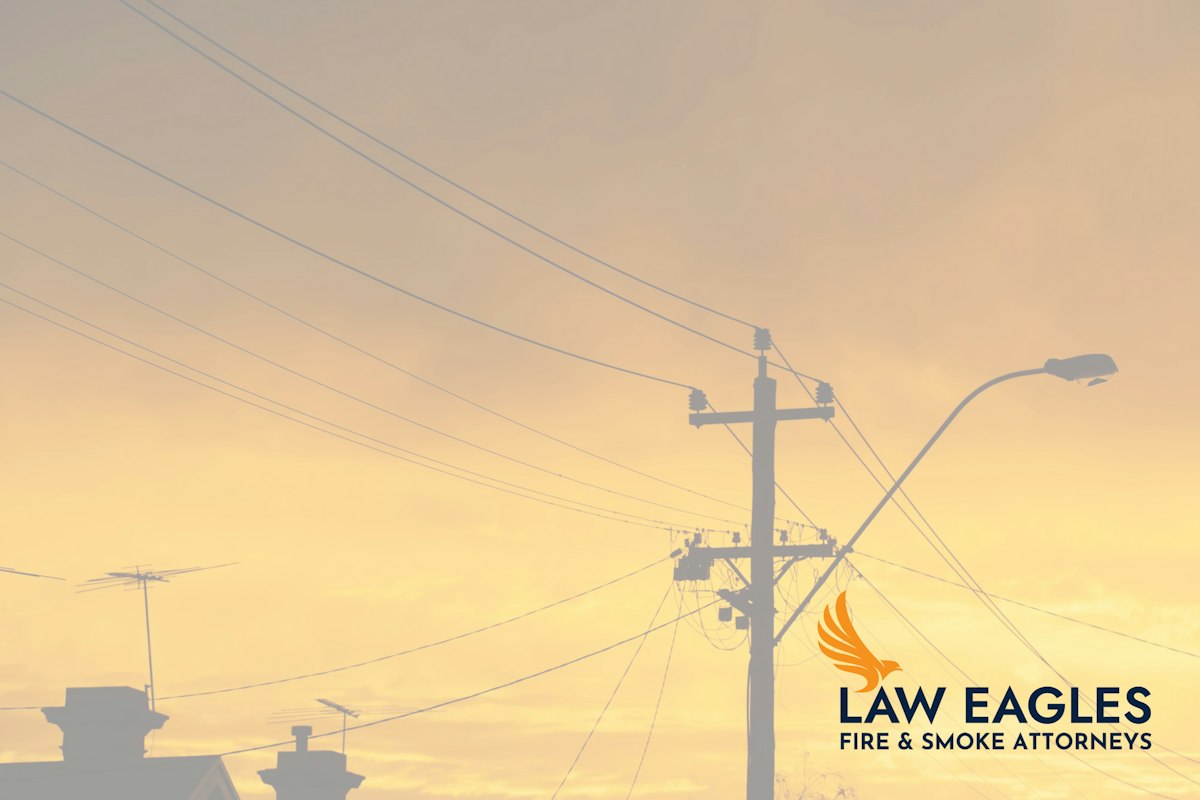
Not every California wildfire starts the same way. Some are sparked by lightning or human accident. A significant number trace back to downed power lines, failed transformers, or utility equipment that sparked during a red flag wind warning. If that’s what happened to your home, you may have more than one path to recovery: your homeowners insurance claim, and a separate potential claim against the utility company itself.
Here’s what California homeowners need to understand about utility wildfire liability, how it’s different from your insurance claim, and why 2026 is a big year for how these cases get handled going forward.
Was Your Fire Caused by Utility Equipment?
Utility-caused wildfires tend to share a few warning signs. The fire started near power lines or substations. It broke out during a red flag warning or high-wind event. The utility company issued, or should have issued, a Public Safety Power Shutoff in the area. Or news reports and Cal Fire investigations later identified equipment failure as the ignition source. If any of that sounds familiar, it’s worth finding out whether the utility bears responsibility, separately from whatever your insurance company decides about your claim.
California’s Inverse Condemnation Doctrine, Explained
California is one of the only states where utility companies can be held liable for wildfire damage even without proving negligence, under a legal principle called inverse condemnation. In plain terms, utilities are treated as quasi-public entities exercising eminent domain-like power. Courts have held that if their equipment causes a wildfire that damages private property, the utility can be required to pay for that damage, much like a government has to pay if it takes or damages private property for public use.
This is different from an ordinary negligence claim. You don’t necessarily have to prove the utility was careless, just that its equipment caused the fire and your property was damaged as a result. That said, these cases are still complex, fact-intensive, and typically involve large-scale litigation once fault is established.
How a Utility Wildfire Claim Is Different From Your Insurance Claim
These are two separate tracks, and they move on different timelines. Your homeowners insurance claim is a contract dispute. You paid premiums, the policy covers fire damage, and your insurer owes you what the policy promises regardless of what caused the fire. A utility liability claim is a separate legal action against the party that started the fire, and it can take years to resolve, especially in mass wildfire litigation involving thousands of claimants.
Importantly, you don’t have to choose one or the other. Your insurance claim should move forward on its own timeline. You shouldn’t wait years for a utility case to resolve before getting your insurance payout. If your insurer later recovers money from the utility through subrogation, that’s a process between your insurer and the utility. It generally shouldn’t hold up what you’re owed under your own policy.
The 2026 Fight Over Utility Liability Protections
This is an active, unsettled issue in Sacramento right now. Governor Newsom has proposed limiting the financial liability that major utilities face in wildfire cases, PG&E, Edison International, and Sempra among them, framing it as necessary to keep utilities financially stable enough to invest in wildfire prevention. A competing Senate plan, backed by other lawmakers, would still allow insurers to pursue legal action against utilities while aiming to speed up payouts to survivors and tighten safety accountability for utility executives.
The core tension is straightforward. Protections that make it harder to hold utilities financially responsible could make it harder for wildfire victims, and the insurers standing behind them, to recover full compensation when utility equipment causes a fire. If you have a fire loss that may trace back to utility equipment, this is a policy fight worth watching, because its outcome could affect how future utility-caused fire claims get resolved.
What This Means If Your Fire Was Utility-Caused
Don’t wait to find out how the Sacramento fight resolves before protecting your own claim. Document ignition evidence as early as possible: photos of downed lines or damaged equipment near the fire’s origin, news coverage identifying a cause, any Cal Fire investigation findings. Keep your insurance claim moving on its own track in the meantime. A possible utility case is not a reason to delay or accept less on your policy claim.
How The Law Eagles Can Help
Our core focus is fighting insurance companies to get you the full value of your policy. That fight doesn’t wait on a utility investigation or a legislative outcome in Sacramento. If evidence points to a utility-caused fire, we’ll help you understand what that could mean for your overall recovery and make sure you’re not left in limbo on either front. We work on contingency: no fee unless we win.
Call (833) 324-5399 or schedule a free consultation to talk through your claim.
Frequently Asked Questions About Utility Wildfire Liability
What is inverse condemnation?
Inverse condemnation is a legal doctrine that can hold California utility companies liable for wildfire damage caused by their equipment, even without proving negligence, because utilities are treated as quasi-public entities under state law.
Can I file an insurance claim and a utility lawsuit at the same time?
Yes. These are separate legal paths. Your insurance claim is based on your policy contract and should move forward on its own timeline, independent of any utility liability case.
How do I know if a utility caused my fire?
Warning signs include a fire starting near power lines or substations, ignition during a red flag warning or high-wind event, and Cal Fire or news investigations identifying equipment failure as the cause.
Will a utility settlement affect my insurance payout?
Generally, your insurer’s potential recovery from a utility through subrogation is separate from what you’re owed under your own policy. Your policy benefits shouldn’t be delayed while a utility case works its way through the courts.
What is Governor Newsom proposing about utility wildfire liability?
As of 2026, Governor Newsom has proposed limiting the financial liability major utilities face in wildfire cases, while a competing legislative plan would preserve insurers’ ability to pursue utilities while speeding up victim payouts and tightening safety accountability.