
January 12, 2026
Smoke Damage Is Real Damage — And Insurers Know It
Your insurer’s adjuster will look at your smoke-damaged home and offer you a few thousand dollars for cleaning. You’ll accept it because the house looks okay on the surface, because you’re exhausted and displaced, and because you don’t know yet that you’re about to live in a toxic environment.
That’s the smoke damage playbook. And we fight it every day.
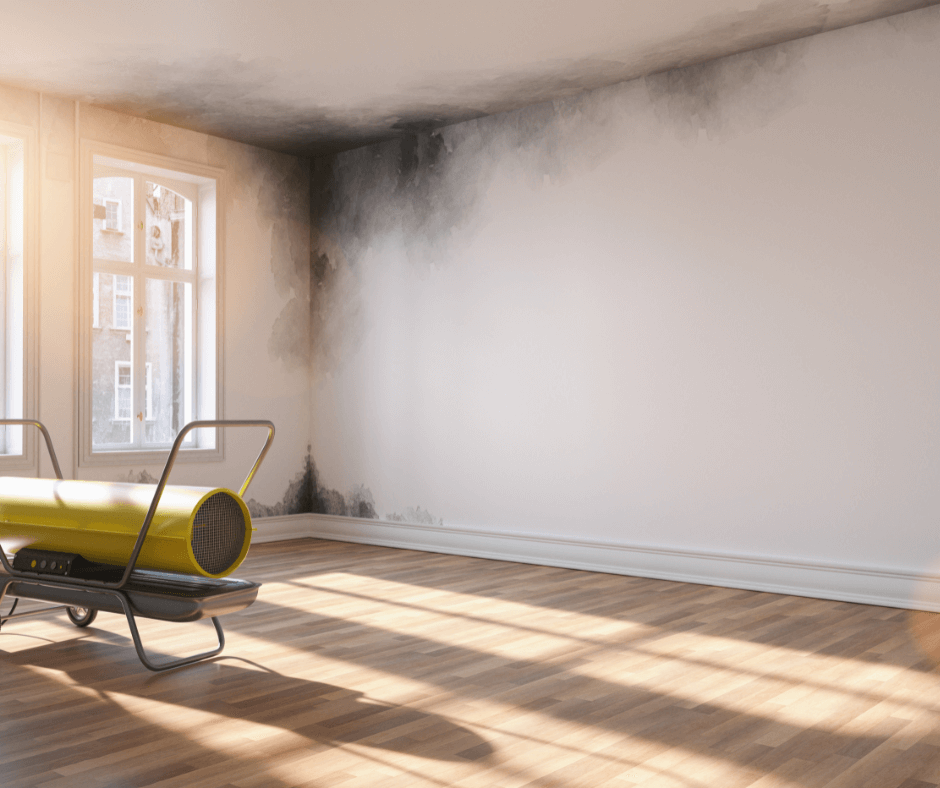
Smoke is not cosmetic. Wildfire smoke contains fine particulate matter, volatile organic compounds, heavy metals, and toxic combustion byproducts that penetrate deep into walls, attics, HVAC systems, and the pores of every surface in your home. Surface cleaning doesn’t fix it. Insurance companies know this — and they offer surface cleaning budgets anyway, because most homeowners accept them without question.
At The Law Eagles, we document smoke damage the right way and fight for the complete remediation coverage your policy provides. Call (833) 324-5399 or visit fireandsmokeattorneys.com/free-consultation/ for a free consultation.
How Smoke Travels and Why It’s So Destructive
To understand why smoke damage claims are so frequently underpaid, you first have to understand how smoke actually behaves during and after a fire.
Smoke Infiltrates Everything
Smoke doesn’t stay where you can see it. It follows air pressure differentials throughout a structure, seeping through gaps in building envelopes, traveling through wall cavities, and infiltrating the HVAC system — which then distributes contaminated air to every room in the house. Even when walls look clean, the insulation behind them, the air ducts, and the attic space above can be heavily contaminated.
Wildfire smoke in particular travels extraordinary distances. Homes many miles from a fire perimeter can have measurable levels of toxic particulates inside the structure. California Assembly Bill 2855 — the Wildfire Smoke Claims Act — acknowledges this reality by requiring insurers to presume smoke damage exists in structures within declared wildfire disaster areas. This shifts the burden of proof and strengthens claims for homeowners who weren’t even in the immediate fire zone.
What’s Actually in Wildfire Smoke
Wildfire smoke is not the harmless campfire smell its name might suggest. It is a complex chemical mixture that includes:
Fine particulate matter (PM2.5) — particles 2.5 microns or smaller that penetrate deep into lung tissue and deposit on every surface inside a home. These particles are small enough to embed in porous materials — drywall, insulation, upholstery, clothing, wood — where they continue to off-gas toxins long after the fire is out.
Volatile organic compounds (VOCs) — including benzene, formaldehyde, acrolein, and other compounds that are released when synthetic materials, treated wood, plastics, and other building materials burn. Many are known carcinogens.
Heavy metals — lead, arsenic, mercury, and other metals released when homes and their contents burn.
Carbon monoxide and other combustion gases — which can be trapped in enclosed spaces long after the fire is out.
The result is that a smoke-damaged home — even one that was never touched by flames — can be a health hazard that requires professional remediation to be safely habitable again.
Health Risks of Inadequate Smoke Remediation
This is not a theoretical concern. The medical and public health literature on wildfire smoke exposure is clear: inadequate remediation of a smoke-damaged home has real health consequences for occupants, particularly children, the elderly, and anyone with existing respiratory or cardiovascular conditions.
Short-term exposure causes eye, nose, and throat irritation, coughing, and respiratory distress. Long-term exposure in an inadequately remediated home has been associated with respiratory disease, cardiovascular effects, neurological impacts, and increased cancer risk. The fine particulates and VOCs in wildfire smoke don’t disappear when the fire is over — they remain in contaminated materials and continue to affect indoor air quality until properly remediated.
This is why the difference between what insurers offer — surface cleaning — and what is medically necessary — professional remediation — matters so much. It’s not a minor dollar dispute. It’s the difference between a safe home and a home that will make your family sick.
The HVAC System: Where Smoke Damage Hides
One of the most consistently overlooked areas in smoke damage claims is the HVAC system. When wildfire smoke enters a home, it circulates through the ductwork, depositing soot and toxic particulates on duct surfaces, coils, filters, and the air handler itself. A contaminated HVAC system then continues to circulate contaminated air throughout the home every time it runs.
Proper smoke remediation of an HVAC system includes duct cleaning, filter replacement, coil cleaning, and — in cases of serious contamination — full system replacement. The cost of HVAC remediation alone can easily run $10,000 to $30,000 or more. Insurers frequently offer to replace filters and call it done. That is not remediation.
An independent industrial hygienist or environmental testing firm can assess the level of HVAC contamination and document what proper remediation requires. This testing creates the evidentiary foundation for an adequate claim — and makes it much harder for your insurer to offer a cleaning budget when replacement is what’s actually needed.
Why Insurers Classify Smoke Damage as Cosmetic
The financial incentive is obvious. A property insurer paying for professional smoke remediation — including HVAC work, attic insulation replacement, air scrubbing, and post-remediation testing — will pay many times more than a property insurer paying for surface cleaning and a coat of paint.
The tactics we see most often:
“The smell will go away.” It won’t. Soot and fine particulates embedded in porous materials continue to off-gas indefinitely. An odor that fades temporarily can return with heat, humidity, or HVAC operation.
Using generic line-item costs for cleaning instead of actual remediation costs. Estimating software like Xactimate has standard line items for cleaning that don’t capture the actual cost of professional smoke remediation in a seriously affected home. Adjusters using these tools are routinely underestimating.
Ignoring hidden contamination. Without industrial hygiene testing, contamination in wall cavities, attic insulation, and HVAC ductwork is invisible. Insurers count on homeowners not knowing to ask for testing.
Limiting coverage to direct fire damage areas. Smoke travels throughout a structure regardless of where the fire occurred. Claiming that smoke damage is only covered in rooms adjacent to the fire source is a misreading of standard policy language.
Documentation That Makes Smoke Damage Claims Stick
Winning a smoke damage claim requires documentation that the damage is real, pervasive, and requires professional remediation. Here’s what we recommend:
Professional environmental testing. Hire a certified industrial hygienist or environmental testing firm to assess contamination levels throughout your home — air sampling, surface wipe samples, HVAC system testing, attic and wall cavity testing where accessible. Test results create an objective, scientific record that is difficult for an insurer to dismiss.
Independent remediation estimates from certified contractors. Get estimates from contractors certified in smoke and soot remediation (look for IICRC certification), not general contractors. These estimates should itemize every component of remediation — cleaning, air scrubbing, HVAC work, material replacement — with supporting documentation for each line item.
Health impact documentation. If you or family members have experienced respiratory symptoms, eye irritation, headaches, or other health effects since the fire, document these with medical records. This supports both the claim for remediation and, in cases of prolonged exposure due to insurer delays, potentially a bad faith or consequential damages claim.
Before and after documentation. Photograph the entire property thoroughly before any cleaning or remediation begins. If you have pre-fire photos or videos of the interior, preserve them as evidence of the property’s prior condition.
Surface Cleaning vs. Professional Remediation: What Your Policy Covers
Standard homeowner’s insurance policies cover the cost of restoring your property to its pre-loss condition. In the context of smoke damage, this means professional remediation — not surface cleaning.
Surface cleaning (wiping surfaces, shampooing carpets, painting walls) addresses visible soot and temporarily reduces odor. It does not remove fine particulates from inside wall cavities, does not clean HVAC ductwork, does not address contaminated attic insulation, and does not restore air quality. Within weeks or months, the contamination re-manifests — odors return, air quality degrades.
Professional remediation is the standard of care for serious smoke damage. It includes air scrubbing and HEPA filtration, full HVAC cleaning and potential replacement, ozone or hydroxyl radical treatment for odor neutralization, selective material replacement where cleaning is not sufficient, and post-remediation air testing to confirm the property has been restored to habitable condition.
If your insurer is offering you a cleaning budget when your home needs professional remediation, they are not paying what your policy requires. That’s where we come in.
California Law and Smoke Damage Claims
California has enacted specific protections for smoke damage claimants, particularly in the context of wildfire disasters.
Assembly Bill 2855 (Wildfire Smoke Claims Act) requires insurers to presume that smoke damage exists in residential structures located within the perimeter of a declared wildfire disaster area. This reverses the burden — rather than requiring the homeowner to prove smoke damage exists, the insurer must demonstrate it does not. This is powerful protection for homeowners in officially declared disaster areas.
California’s Fair Claims Settlement Practices Regulations require insurers to conduct a thorough investigation of your claim, communicate promptly, and not delay or deny claims without a legitimate basis. An insurer that dismisses smoke damage as cosmetic without an independent assessment may be violating these regulations.
California Insurance Code Section 790.03 prohibits bad faith insurance practices, including misrepresenting the extent of coverage, unreasonable delays, and failing to conduct an honest investigation. A claim that systematically undervalues smoke damage may give rise to bad faith liability in addition to the policy benefit.
How an Attorney Changes a Smoke Damage Claim
The most important thing an attorney brings to a smoke damage claim is the ability to document damage properly and challenge an insurer’s undervaluation with evidence — not just a counter-offer.
We hire independent industrial hygienists to test and document contamination. We get certified remediation contractors to provide detailed estimates based on actual scope. We challenge every line item in the insurer’s estimate. We invoke the appraisal process when appropriate. And when an insurer continues to deny or underpay in bad faith, we file suit and pursue every remedy available under California law.
We work on contingency — you pay nothing unless we recover. Call (833) 324-5399 or schedule your free consultation online today.
By the Numbers
Fire is a relatively rare cause of homeowners insurance claims — affecting roughly 1 in 430 insured homes, according to the Insurance Information Institute (III) — but it’s consistently the most expensive one. III data puts the average fire and lightning claim between 2019 and 2023 at $88,170, well above the average claim for nearly every other cause of loss. That gap is exactly why insurers have a financial incentive to minimize how much smoke damage, as opposed to visible fire and structural damage, actually costs to remediate.
Related Reading
Smoke damage claims are frequently where insurers get more creative about paying less, a pattern that shows up across bad faith delay tactics more broadly. Our guide to maximizing your recovery in a California fire damage claim covers strategies that apply here too, and if your insurer keeps stonewalling, here’s how to know it’s time to bring in a fire damage insurance lawyer.
Frequently Asked Questions: Smoke Damage Insurance Claims
Is smoke damage covered by homeowner’s insurance?
Yes. Standard homeowner’s insurance covers smoke damage — including the cost of professional remediation. The dispute is almost never about whether coverage exists; it’s about how much the insurer will pay. Insurers routinely classify smoke damage as cosmetic and underpay. A fire damage attorney can document the full scope and force payment of what your policy actually provides.
How far can smoke travel from a wildfire and still damage a home?
Dozens of miles. Homes well outside the fire perimeter can have measurable toxic contamination from wildfire smoke. California AB 2855 requires insurers to assume smoke damage is present in structures within declared wildfire disaster areas — a powerful protection for homeowners who weren’t in the immediate fire zone.
What is the difference between surface cleaning and professional smoke remediation?
Surface cleaning is wiping visible soot and painting over it. Professional remediation includes air scrubbing, full HVAC cleaning or replacement, material replacement where cleaning is insufficient, ozone or hydroxyl treatment, and post-remediation testing to confirm the property is safe. Insurers offer surface cleaning; your policy covers remediation. Don’t accept the cheaper solution when you’re entitled to the complete one.
What health risks does smoke damage pose?
Serious ones. Wildfire smoke contains fine particulates, VOCs including benzene and formaldehyde, heavy metals, and carcinogens. Long-term exposure in an inadequately remediated home is associated with respiratory disease, cardiovascular effects, neurological impacts, and increased cancer risk — especially for children and elderly occupants.
What if my home wasn’t in the fire zone but was affected by smoke?
You may still have a valid claim. California AB 2855 creates a presumption of smoke damage in declared disaster areas. Even outside formal disaster areas, documented evidence of smoke infiltration supports a claim. A smoke damage attorney can help you gather the testing and documentation needed to fight for coverage.
How do I prove the extent of smoke damage to my insurer?
Professional environmental testing is the gold standard — air sampling, surface wipe samples, HVAC testing. Pair that with independent remediation estimates from IICRC-certified contractors who itemize every remediation component. This creates an objective record that is very difficult for an insurer to dismiss with a generic surface cleaning estimate.